

Introduction
Ukraine is currently facing serious challenges in the energy sector, in particular due to military operations and infrastructure damage. In this difficult situation, cogeneration (gas piston) plants (CGP plants) are becoming an important element in ensuring the country’s energy security. CGP plants provide efficient generation of electricity and heat at the same time, which significantly reduces energy losses and increases the overall efficiency. They are flexible, reliable and can be quickly deployed in various sectors of the economy, from industrial facilities to municipal heating networks.
The principle of operation of cogeneration gas piston plants
Cogeneration gas-piston plants operate on the principle of combined heat and power generation. The main elements of the system are a gas engine, a generator and heat exchangers. The gas piston engine runs on natural gas or biogas, generating mechanical energy that is transferred to the generator for conversion into electricity. In parallel, the heat generated by the engine is utilized in heat exchangers to provide heat.
The main stages of CGP plants operation:
- Fuel combustion – natural or biogas is burned in a reciprocating engine.
- Electricity generation – mechanical energy from the engine drives a generator.
- Heat utilization – the heat generated by the engine is transferred to the heating system.
This dual-purpose system significantly increases the efficiency of energy use.
The main stages of CGP plants operation:
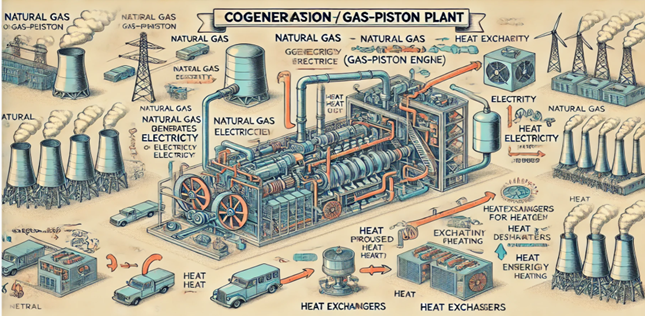
The types of currently used cogeneration.
1.Combined heat and power plants (CHP)
CHP is a classic example of cogeneration, where electricity and heat are produced simultaneously to heat cities or industrial enterprises. For example, in large European cities, such plants are the main source of heat supply. CHP plants use different types of fuel: coal, natural gas, biomass or even household waste.
2. Biogas cogeneration plants
These plants run on biogas produced by processing organic waste (agricultural residues, animal waste, municipal organic waste, etc.). Such cogeneration is environmentally friendly and efficient, as waste is converted into energy. An example is a biogas plant at an agricultural enterprise, where the gas produced from organic waste is used to generate electricity and heat.
3.Microturbine cogeneration plants
Microturbines are compact cogeneration plants used for the needs of small and medium-sized enterprises, residential complexes or hospitals. They run on natural gas or biogas to produce electricity and heat. Due to their compact size, microturbines can be installed even in buildings with limited space.
4 Heat pumps with cogeneration
Heat pumps can be part of cogeneration systems when they are used to heat water and heat buildings while generating electricity. For example, installing a heat pump in combination with solar panels can be an effective system for producing heat and electricity for private homes.
5. Gas turbine cogeneration plants
Large industrial facilities use gas turbine cogeneration plants. They run on natural gas or oil fuel, generating electricity and heat for technological processes or space heating. For example, such plants are widely used in metallurgy, the chemical industry or oil refining plants.
6. Cogeneration from municipal waste
Plants that use municipal or industrial waste to produce energy are an example of efficient use of resources. In such plants, waste is burned to generate electricity, and the heat is used for heating or hot water production. This is a common practice in many European countries.
7. Cogeneration based on renewable energy sources
Some cogeneration plants can be integrated with renewable energy sources, such as solar panels or wind turbines, for additional energy production. For example, a cogeneration plant can use biogas for continuous generation, supplementing the energy from solar panels during the day.
These examples demonstrate the diversity of cogeneration technologies that can efficiently use different fuels and meet energy needs with minimal losses.
Comparison of the efficiency of cogeneration plants and conventional generators
Cogeneration plants have a significantly higher efficiency than conventional generators. Classical electric generators usually have an efficiency of 30-40%, as most of the thermal energy is lost in the form of waste heat. In the case of CGP plants, this figure can reach 80-90%, as they use both electrical and thermal energy released during operation.
Graph of efficiency comparison:
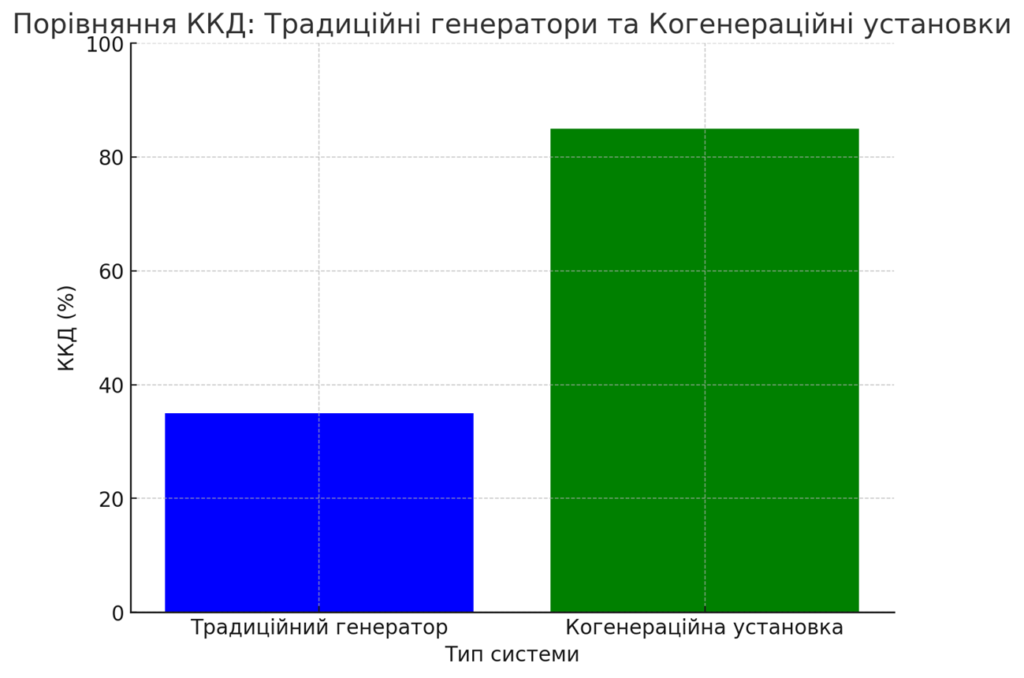
A graph is created for you to demonstrate the difference in efficiency between conventional generators and cogeneration plants.
Comparison of the efficiency: conventional generators and CGP plants
Comparison of the efficiency: conventional generators and CGP plants
System type
Conventional generator
CGP plant
The graph shows a significant difference between the efficiency of conventional generators (35%) and cogeneration plants (85%). Due to the use of waste heat, cogeneration plants significantly outperform traditional generators in terms of efficiency.
The importance of cogeneration plants in the energy situation in Ukraine
Cogeneration plants are becoming particularly relevant for Ukraine, given the need to improve energy security, especially in the context of regular damage to centralized power grids. Such systems can operate autonomously or as part of local power grids (micro- and nanogrids), which increases their flexibility in use.
The main advantages of cogeneration plants:
Independence from centralized systems: they can operate autonomously, which is important in case of damage to the main power supply lines.
Fuel savings: increased efficiency of gas or biogas use.
Fast implementation: can be deployed relatively quickly at industrial facilities, residential buildings or hospital complexes.
Industry Development Plans in Ukraine and Worldwide
Ukraine has great prospects for the development of cogeneration plants. One of the key areas is the creation of micro-energy systems that combine cogeneration with renewable energy sources, such as biogas plants or solar panels. This will significantly reduce dependence on centralized energy systems and increase the stability of energy supply.
There is a growing interest in cogeneration technologies globally, especially in the context of the energy transition to more environmentally friendly and efficient energy sources. The EU and the US are actively implementing programs to support the development of local cogeneration networks, especially those based on renewable energy sources.
Conclusion
CGP plants are an important element of the future energy system of Ukraine and the world. They allow for more efficient use of resources, increase energy security and have great potential for integration with renewable energy sources. In the coming years, we can expect a significant increase in interest in such technologies both in Ukraine and internationally.